Contact13428997519

Research Banner

页面Banner
Hot keywords:

R&D and Production

Hardware-Software Synergy, End-to-End Control

The R&D function defines performance indicators, while the manufacturing function implements process standards. Quality control data, in turn, drives hardware iteration in reverse, forming a complete closed loop of design, pilot production, testing, mass production, and optimisation.

Hardware R&D

Hardware R&D

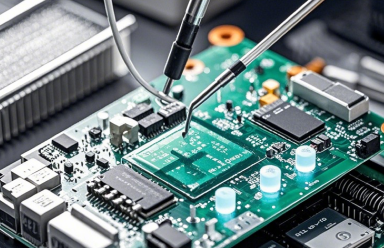
A multidisciplinary hardware team has been established to cover four core domains: ID industrial design, structural engineering, circuit and embedded development, and spectral imaging system integration. From product definition and optical module design to mould development for precision structural components, all work is completed in-house, ensuring the stability of detection light sources and the accuracy of imaging from the source.

Software R&D

Software R&D

A comprehensive digital product portfolio has been built, covering UI/UX interaction design, Windows and Android applications, backend cloud service platforms, 2D multispectral image processing and quantitative algorithms, as well as 3D modelling, multispectral fusion, and multimodal AI algorithms developed in parallel. The algorithm team continuously iterates skin feature recognition models to realise full-process automation spanning image acquisition, multidimensional analysis, and assessment reporting.

Manufacturing

Manufacturing

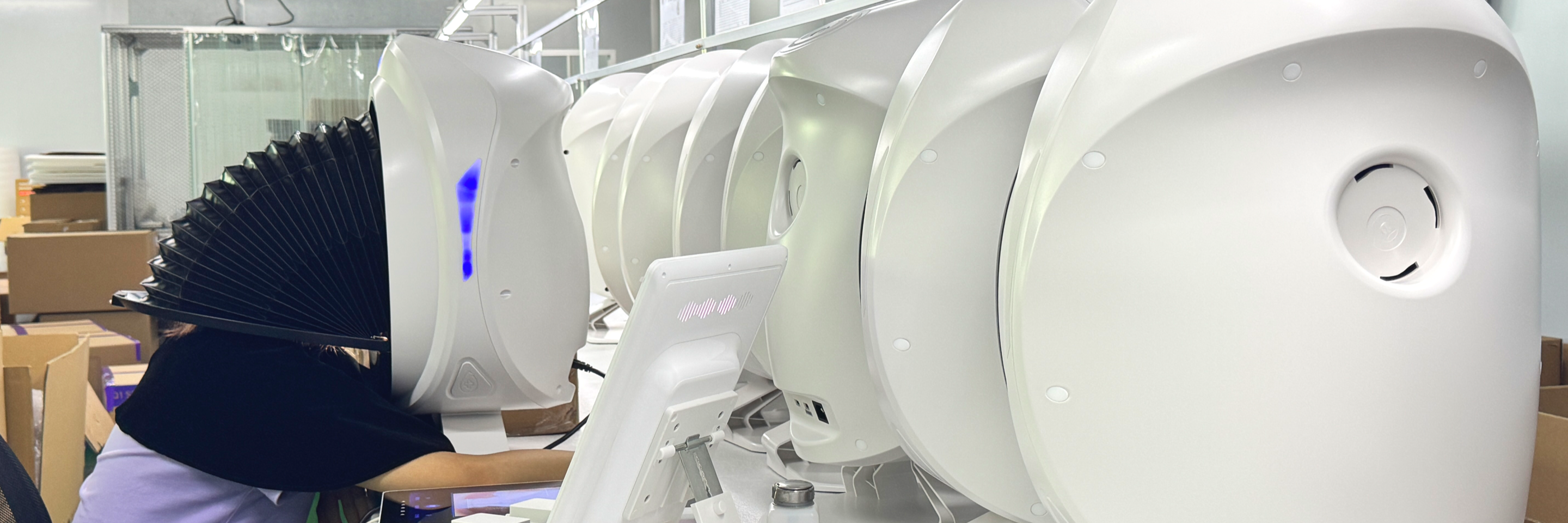
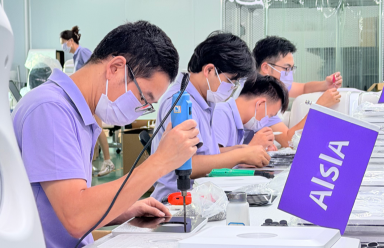
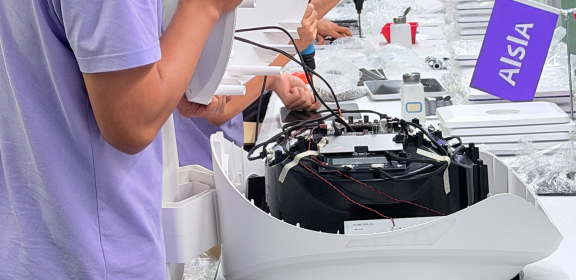
All AISIA analysers are assembled and calibrated on the Company's self-operated production lines in Shenzhen, with strict implementation of incoming material inspection, in-process patrol inspection, complete machine burn-in testing, and full pre-delivery QC inspection. Each device is accompanied by an individual inspection and calibration certificate to ensure consistent and fully traceable delivery quality.

Market Expansion

Dual-Engine Growth, Deep Global Presence

The market team continuously gathers customer requirements and competitive intelligence, then systematically feeds these insights back to the R&D team as key input for the next generation of product iteration, thereby creating a virtuous cycle in which market demand guides R&D direction and R&D capabilities strengthen market competitiveness.

Domestic Business Division
June 2026 Shanghai Hongqiao CIBE

Domestic Business Division

The Shanghai headquarters focuses on medical informatisation initiatives for public hospitals and dermatology clinics, actively participates in domestic medical informatics exhibitions and academic conferences, and continuously strengthens the Company's technological barriers; the Shenzhen branch, by contrast, targets the core urban end-market through chains of medical aesthetics institutions, branded chain networks, and distributor-based channels. By participating in leading industry beauty exhibitions, it has established a localised sales and service network. Through close coordination between the two locations, the Company achieves dual-scenario coverage across both in-hospital medical services and out-of-hospital consumer healthcare.

Overseas Business Division (AISIA Brand)
May 2026 BeautyEurasia Istanbul

Overseas Business Division (AISIA Brand)

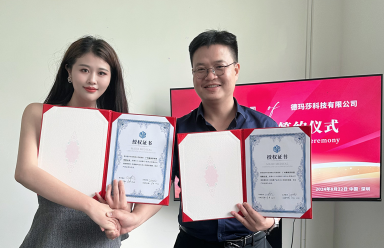
With the Shenzhen branch serving as the international business hub, the team has participated in more than 50 global professional beauty and medical equipment exhibitions across key regions including Europe, North America, Southeast Asia, and the Middle East. Its products are now exported to more than 100 countries and regions, supported by long-term and stable partnerships with high-quality local distributors and medical institutions. The overseas market strategy places strong emphasis on technical certification and internationally authoritative credentials, continuously reinforcing AISIA's global credibility and brand recognition in the field of professional skin measurement.

Education & Training

Professional Enablement, Tiered Delivery

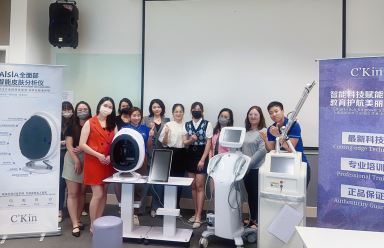
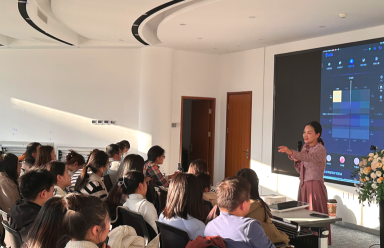
Pain points and operational misunderstandings identified during training are fed back to the algorithm and engineering teams to optimise interaction logic and simplify operating procedures, thereby forming a healthy cycle of use, feedback, and iteration.

After-sales Service

After-sales Service

End-to-End Protection, Transparent and Traceable

After-sales maintenance records and device failure-rate data are centrally archived within the quality management platform. Quality analysis reports are generated on a quarterly basis and synchronised to the R&D department as critical input for optimising hardware selection and improving structural design, thereby genuinely realising a virtuous cycle in which service feeds back into design and design reduces after-sales burden.

Warranty and Repair Policy

Warranty and Repair Policy

The Company upholds a service commitment of a one-year warranty for the complete machine and lifetime repair support. All after-sales terms, response timelines, and charging standards are clearly communicated to customers in written agreements, ensuring a transparent service process and well-documented customer rights. For overseas clients, commonly used spare parts are supplied with shipments to effectively shorten repair turnaround time and reduce the time cost of cross-border maintenance.

Remote Guidance and After-Sales Support

Remote Guidance and After-Sales Support

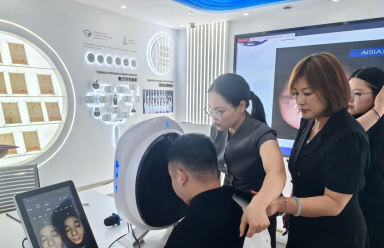
Each customer is supported by a dedicated after-sales engineer on a one-to-one basis. Within China, solutions are provided within eight hours, while overseas inquiries receive a response and proposed solution within 48 hours in consideration of time-zone differences. Common issues such as software configuration, network connectivity, and system upgrades are resolved promptly through remote desktop assistance and video guidance; for complex faults, lifetime return-to-factory repair services are provided. In addition, for medical information data acquisition and AI algorithm analysis modules, regular system security inspections, data backup guidance, and compliance review recommendations are carried out to ensure the security and stability of customer measurement data throughout storage, transmission, and usage across the full process chain.